AI system for Argus telescope to process 100 million space alerts per night
An international team led by the University of Minnesota is developing an AI-based software system for the future Argus Array observatory. It will process up to 100 million astronomical alerts per night, ten times more than the Vera C. Rubin Observatory is expected to generate. The system will evaluate signals within seconds and forward the most interesting events to scientists and other observatories within minutes. A working prototype is planned by the start of Argus Array observations in 2027, and the software will be open source.
An international team led by the University of Minnesota is developing a software system capable of processing up to 100 million astronomical alerts per night for the future Argus Array observatory. The project is part of the Eric and Wendy Schmidt Observatory System, which also includes the Deep Synoptic Array radio telescope and instruments for spectroscopic and infrared follow-up observations.
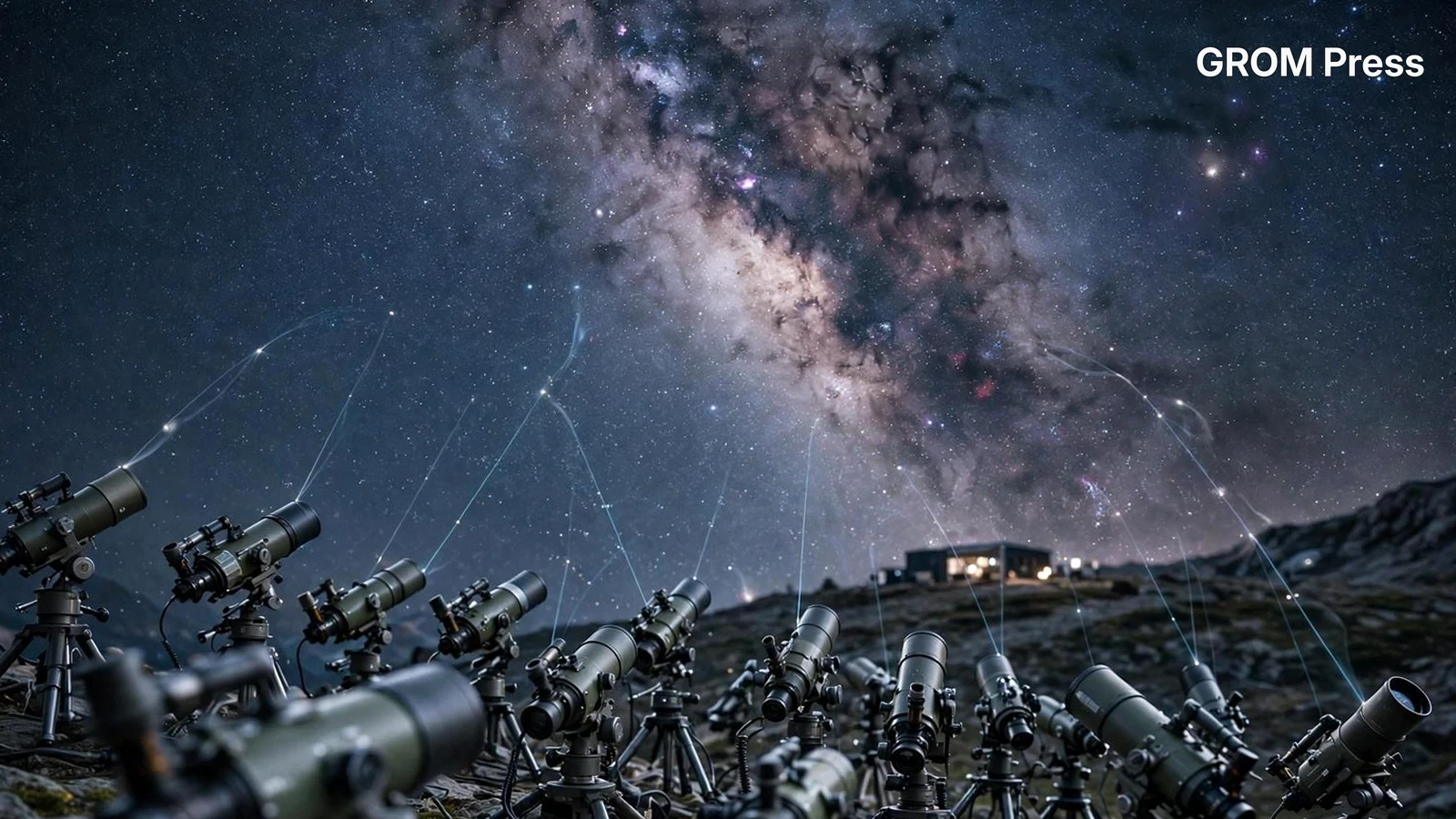
Argus Array will scan the northern sky continuously using about 1,200 small telescopes operating as a single system with 122 gigapixel resolution. The expected raw image stream will reach about 2,000 gigabits per second, and the number of alerts will reach 100 million per night. For comparison, the Vera C. Rubin Observatory is expected to generate about 10 million alerts over the same period.
The developers say the system will use multi-stage processing: first quickly filtering out less promising signals, then applying more complex computations to events that deserve attention. Central and graphics processors will be used together with machine learning algorithms. Primary assessment is planned within seconds, and the most interesting results will be transmitted to researchers within several minutes.
The purpose is to catch rapidly changing and fading events such as supernova flashes, fast radio bursts, and neutron star collisions. If the system fails to recognize a promising signal and direct other instruments to it in time, the opportunity to study the phenomenon will be lost.
The developers plan to prepare a working prototype by the start of the first Argus Array observations, expected in 2027. The software will be open source, allowing other scientific groups to use it, create their own filters, and connect additional telescopes. The system will also be able to match radio signals with optical flashes in the same area of the sky and take into account gravitational-wave alerts.
Source: GROM.PRESS