Electron pairs in high-temperature superconductor may persist up to room temperature, study finds
Researchers report that Cooper pairs in a high-temperature superconductor can survive at temperatures far above the onset of zero resistance, including room temperature. The team says this suggests the main obstacle to room-temperature superconductivity may be phase coherence rather than pair formation, though no such material has been created.
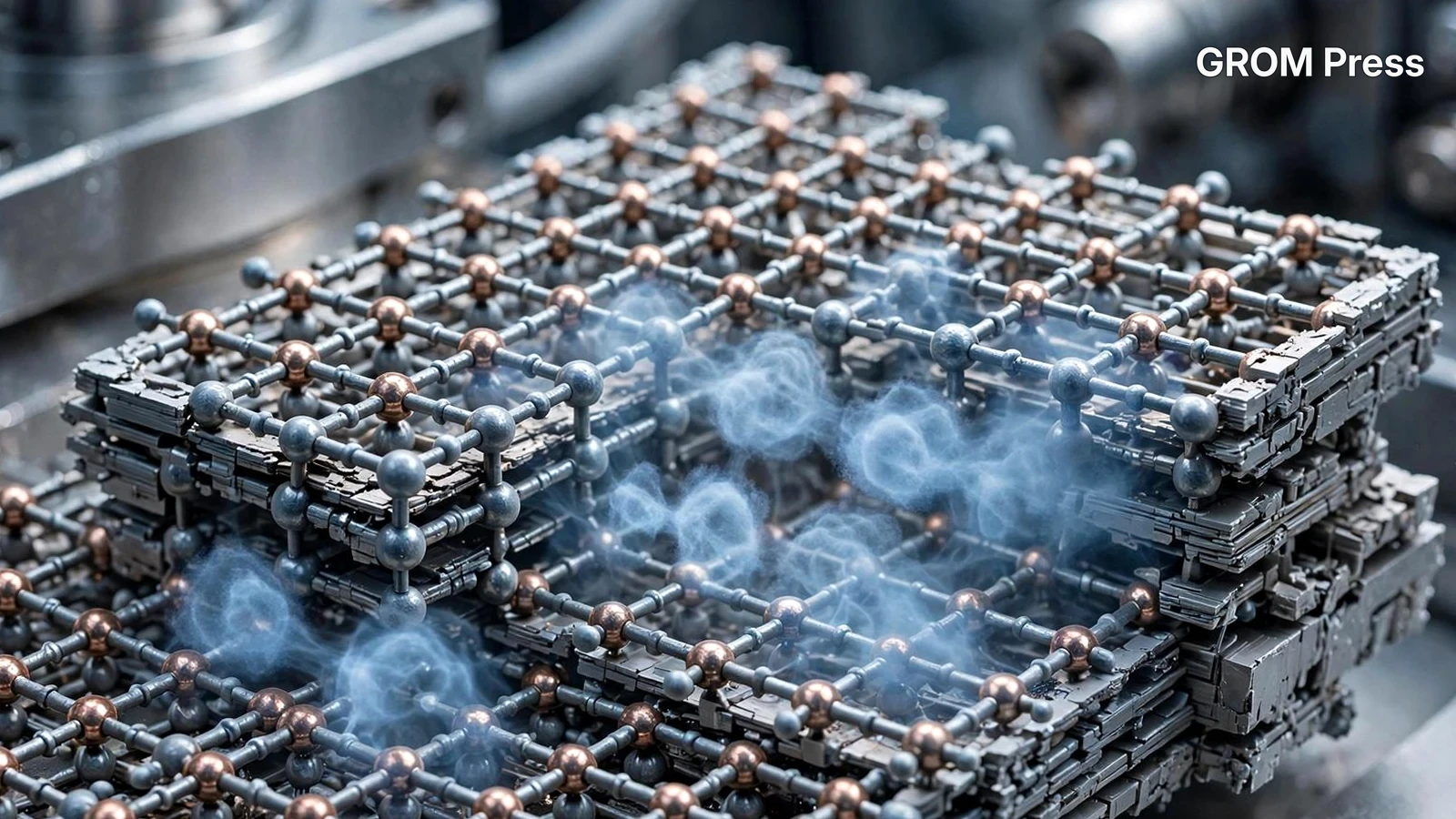
Scientists have reported new findings on the conditions required for superconductivity, focusing on high-temperature superconductors such as cuprates. According to the researchers, superconductivity requires two processes: electrons must first form Cooper pairs, and these pairs must then move coherently while maintaining a shared quantum state. Only when both conditions are met does a material conduct electricity without resistance.
In conventional superconductors, pair formation and coherent motion begin at approximately the same temperature. In high-temperature materials, including cuprates, these processes are separated: electronic pairs can emerge at significantly higher temperatures than the temperature at which superconductivity appears. The new measurements indicate that the mechanism holding pairs together can persist up to room temperature.
Read the full story on GROM.PRESS
Source: GROM.PRESS