iPad Air versus iPad Pro: what the $450 price gap buys
The 11-inch iPad Air with an M4 chip and 128GB storage costs $749, while the 11-inch iPad Pro with an M5 chip and 256GB storage costs $1,199, a difference of $450. The Pro offers a brighter tandem OLED display with 120Hz ProMotion, LiDAR, Face ID, quad speakers, faster external-display output, and a thinner 5.3mm body. The Air has a 500-nit laminated IPS LED display, Touch ID, stereo speakers, and a 6.1mm body. Both provide 10 hours of battery life and 12GB of unified memory.
Main event
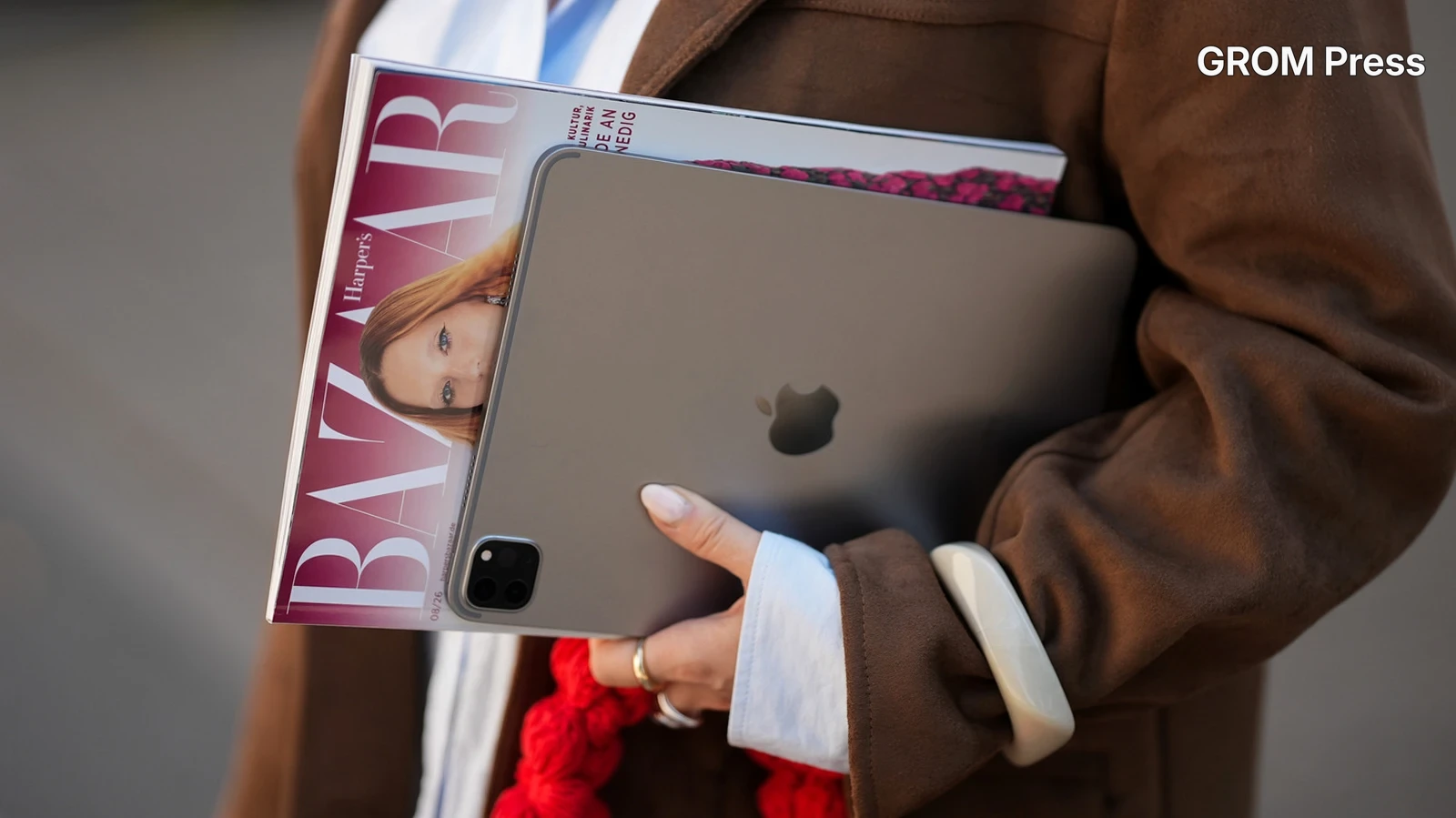
The comparison centers on the price difference between Apple's 11-inch iPad Air and 11-inch iPad Pro. The Air starts at $749 with an M4 processor and 128GB of storage. The Pro costs $1,199 with an M5 processor and 256GB of storage. The gap is $450. Both models are also available in a 13-inch size.
Display
The iPad Air uses a laminated IPS LED display with P3 wide color gamut support and 264 ppi pixel density. Its brightness is rated at 500 nits. The iPad Pro also has 264 ppi, but uses a tandem OLED display rated at 1,000 nits and up to 1,600 nits with HDR. It has a contrast ratio of 2,000,000:1 and supports 120Hz ProMotion, which can drop to 10Hz for static content to conserve battery. Apple offers nano-texture glass for top-tier Pro models at an additional cost to reduce reflections and hide smudges.
Performance
The latest iPad Air launched in March 2026 with the M4 chip. The iPad Pro uses the M5 chip, introduced in October 2025. The article states that the M5 was twice as fast as the M4 when running local AI models for advanced image generation tools. It also offers 45 percent higher graphics performance and 15 percent faster multithreaded performance over the M4. The M5 enables the iPad Pro to drive external displays at 120Hz, while the Air is restricted to 60Hz. Both devices have 12GB of unified memory.
Cameras and authentication
The iPad Pro includes a LiDAR sensor next to its rear camera, which helps with autofocus and AR scanning. Through third-party apps such as Polycam, it can create floor maps and 3D renders. Apple's Measure app can accurately measure item heights and distances on the Pro. The Air also has the Measure app but lacks the LiDAR sensor. On the front, the Pro supports Face ID and a TrueDepth camera array for spatial face renders, Animoji, Memoji, and Portrait Mode selfies with background blur adjustments. The Air relies on Touch ID.
Audio, connectivity, and design
The iPad Pro has quad speakers, while the Air has stereo speakers. The Pro supports fast charging with a 60W power adapter, which is not included. Its Thunderbolt 3 / USB 4 USB-C port transfers large files faster and drives external monitors at 120Hz. The Pro is 5.3mm deep, compared with 6.1mm for the Air. Both devices offer the same 10 hours of battery life for web browsing and video streaming.
Price context
The article attributes current prices partly to an ongoing RAM crisis that has spiked consumer tech prices and says Apple has passed those costs to customers. The iPad Air's prior price was $599, representing a price hike this year.
Assessment
The article states that the performance and display advantages are niche for many users. It concludes that casual users do not have enough reason to spend $450 more for the Pro. The Air is presented as the right balance of performance and features for those who do not use video and photo editing intensively or make the iPad their primary work device.
Source: GROM.PRESS