Boom Supersonic successfully tests first prototype of its own engine core
Boom Supersonic has completed the first test of the gas generator for its Symphony engine, which is intended for the Overture supersonic passenger aircraft. The test took place on 21 November at Colorado Air and Space Port near Denver. The company plans to test a fully assembled engine around mid-2027.
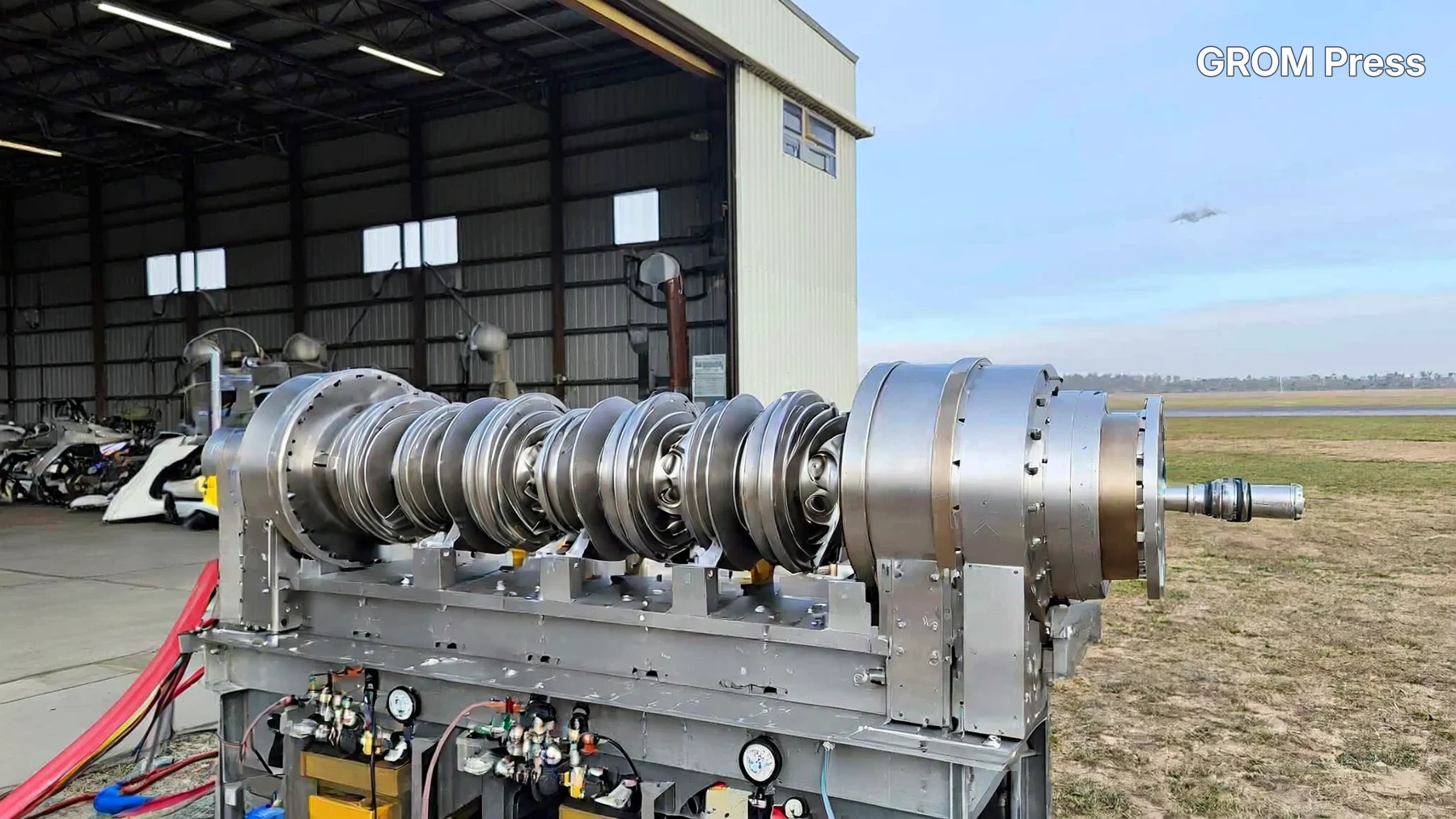
Boom Supersonic has carried out the first test of a prototype gas generator for its own aircraft engine, the company said. The test was conducted on 21 November at Colorado Air and Space Port near Denver. It was the second attempt after an initial effort, according to the company. Founder and Chief Executive Blake Scholl said engineers had initially assessed the probability of a successful launch at less than 50 percent. The first run was intentionally short to check the main systems and collect as much information as possible. The company intends to gradually expand the test programme over the next two months.
The gas generator is the core of the system and will serve as the basis for two power units. The first is an industrial gas turbine called Superpower with a capacity of 42 megawatts, intended for powering data centres, including those serving artificial intelligence systems. The second is a turbofan engine called Symphony with thrust of about 40,000 pounds-force, approximately 178 kilonewtons, planned for use on the supersonic airliner Overture. Both units will share a gas generator with a six-stage high-pressure compressor and a single-stage high-pressure turbine. The designs will differ in low-pressure compressors and turbines: the industrial version will receive a four-stage compressor, while the aviation version will have a three-stage compressor. Symphony will also be significantly lighter because it does not require the same configuration as the stationary unit. Boom expects to begin testing a fully assembled engine around mid-2027.
The Symphony engine is intended to provide the Overture supersonic passenger aircraft with a cruise speed of up to Mach 1.7, or 2,100 kilometres per hour. In parallel, the company is building its own foundry to produce single-crystal turbine blades and guide vanes from special heat-resistant alloys. The facility will be located at the new Superpower Superfactory manufacturing complex in Colorado, covering about 18,600 square metres. Production will be fully digital and will not require traditional tooling. Boom explained that it wants to independently control the release of critically important components that are difficult to purchase from third-party suppliers.
Source: GROM.PRESS